ORGANIZERS AND COLLABORATORS
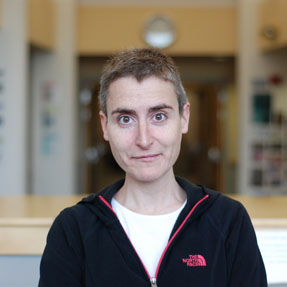
Blanca Ayuso de Dios received her Phd in Mathematical Sciences from Universidad Autonoma de Madrid (Spain) in October 2003. After a three year Postdoc at Pavia, she spent some time at Madrid and Barcelona as Ramon y Cajal researcher. She is currently Associate Professor of Numerical Analysis at the University of Milano-Bicocca and associated researcher at Istituto di Matematica Applicata e Tecnologie Informatiche “Enrico Magenes”, IMATI-CNR at Pavia (Italy). Her research is mainly concerned with the design and analysis of numerical methods (mostly of finite element type) for Partial Differential Equations. She is also active in the analysis and development of fast solvers for the algebraic systems arising from the numerical discretizations; in particular, domain decomposition and multilevel methods. The applications in which she works are related to Continuum-Mechanics, Plasma Physics and, more recently, Machine Learning.
More information can be found in her homepage below:
https://en.unimib.it/blanca-pilar-ayuso-de-dios
Title and abstract of the Talk: To be announced
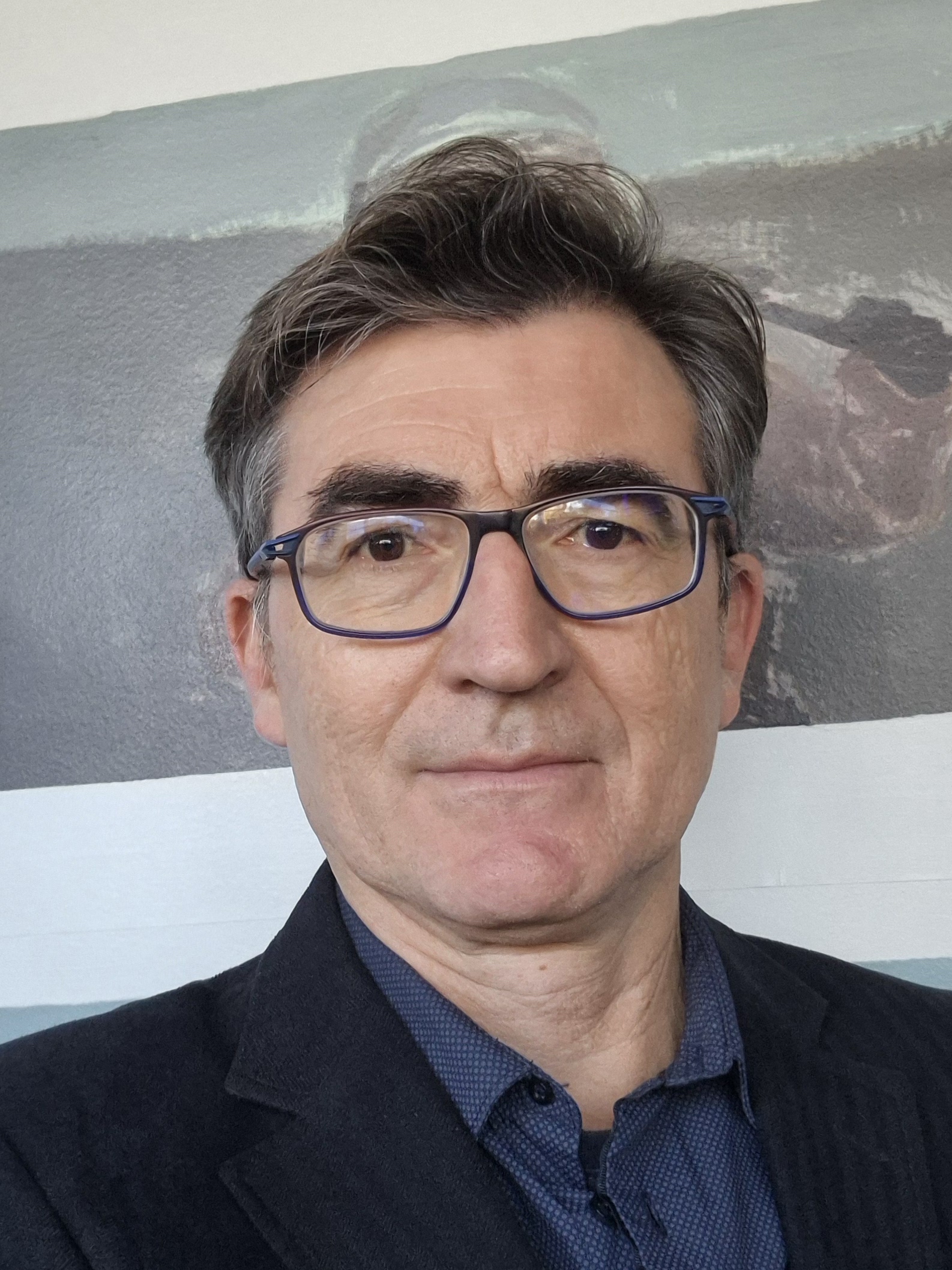
Sergio Blanes is full Professor of Applied Mathematics at Universitat Politècnica de València, Spain. He earned his PhD in Theoretical Physics from the Universitat de València in 1998, with two stays at the Univ. Maryland, USA (1995 and 1996). Following this, he held postdoctoral research positions at the University of Cambridge (1999-2001) and the University of Bath (2001-2002), and was awarded a Ramón y Cajal Research Fellowship in 2002. He was also a visiting researcher at the Isaac Newton Institute in 2019 and has completed four research stays at the Univ. Cambridge (2006 and 2025) and UCSD (2012 and 2013). His research interests include numerical analysis, geometric numerical integration and computational mathematics and physics. He has made contributions on splitting and compositions methods for differential equations (coauthoring an introductory book and a review paper in Acta Numerica 2024), the Magnus expansion (coauthoring a review paper in Physics Reports 2009), Lie group methods, celestial and quantum mechanics, and approximations to matrix functions. He also serves on the editorial board of Mathematics and Computers in Simulation, Journal of Computational Dynamics and Geometric Mechanics.
More information can be found in his homepage below:
https://personales.upv.es/serblaza/
Title and abstract of the Talk: To be announced

Tomás Caraballo is Professor at the Departamento de Ecuaciones Diferenciales y Análisis Numérico of the University of Sevilla, Spain. He received his Ph.D. in Mathematical Sciences from the University of Sevilla in November 1988. His research interests include deterministic and stochastic dynamical systems and applications from the applied sciences. More specifically, he has worked on stochastic partial differential equations, models with delay and memory, impulsive systems, non-autonomous and random dynamical systems, nonlocal differential equations including those of fractional time, models from biology, epidemiology, physics, population dynamics, etc. He has published more than 400 papers so far, and is within the most influential researchers according to the Standford University classification. More information can be found in his homepage below:
https://personal.us.es/caraball/
https://personal.us.es/caraball/tcgpublic.html
Title and abstract of the Talk: To be announced

Ana Carpio earned her PhD from Université Paris VI (1993) and was a postdoctoral researcher at University of Oxford (1996-97). She received the ‘I SEMA award for young researchers’ (1998). Since 2006 she is a Full Professor of Applied Mathematics at Universidad Complutense, where she leads the group ‘Mathematics applied to physical and biological systems’.
Her research interests include computational biology and materials science, numerical analysis, partial differential equations and inverse problems with applications in biomedicine and geophysics. Some contributions: L1 regularity for Navier-Stokes equations through Hardy spaces, depinning of nonlinear waves in discrete systems, computational models of defects in Graphene, topological derivative based inversion methods, uncertainty quantification in elastography, analysis of kinetic models for angiogenesis, computational models of cancerous cell invasion and biofilm/tissue development. Work on biomedicine has resulted in ongoing collaborations with Madrid Hospitals.
She has been an invited speaker in 74 international conferences (24 plenaries, 14 keynote). She organized the 80th birthday Conference in honor of Peter Lax and Louis Nirenberg (2006) and a Focus Program at the Fields Institute (2018). She has spent sabbatical periods at Stanford, Harvard and the Courant Institute of New York University.
She has been principal investigator of 28 national and international projects and published about 90 papers in high impact journals. She has advised 8 PhD thesis and supervised about 70 researchers. She has served in committees of national agencies (CNEAI 2008-09, 2022-23, ANECA 2008-17) and in the ECMI Council (European Consortium for Mathematics in Industry 2020-24).
Title and abstract of the Talk: To be announced
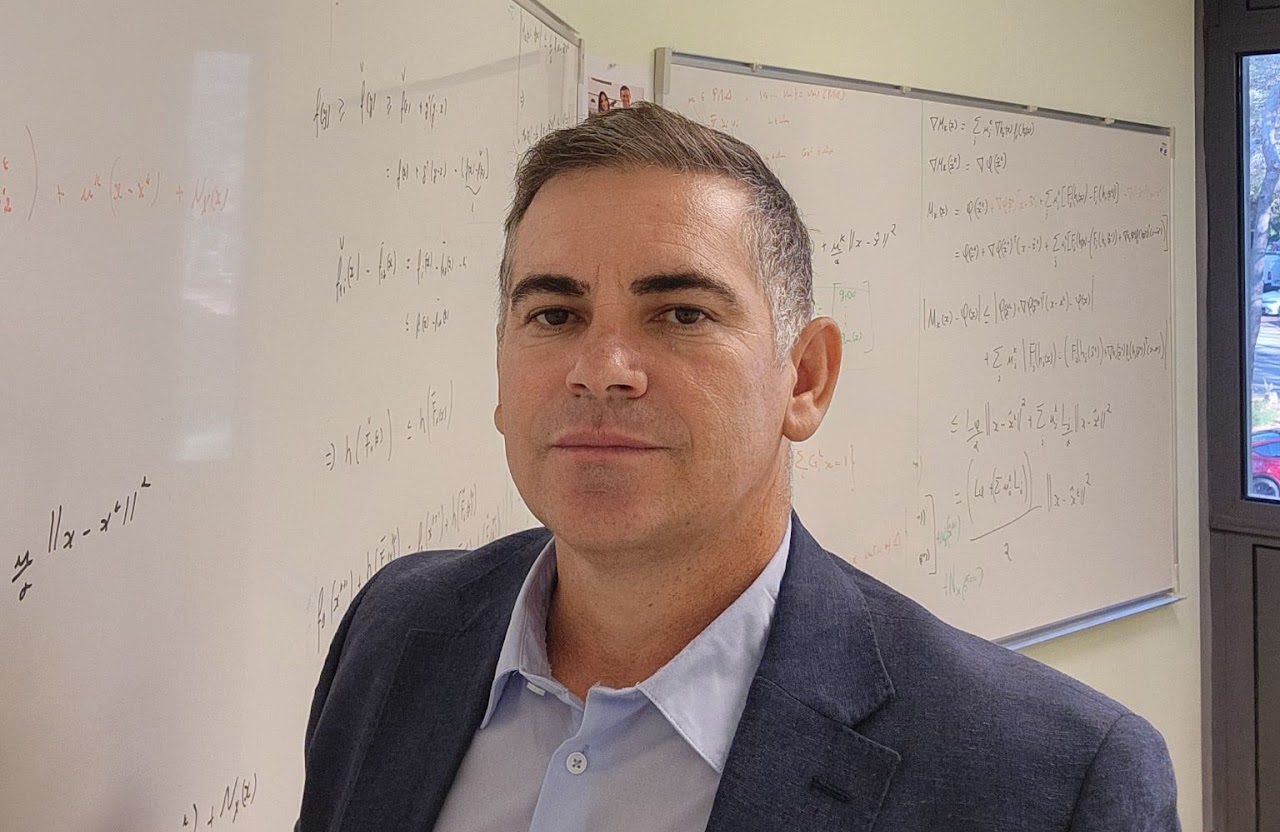
Welington de Oliveira is an Associate Professor at the Centre de Mathématiques Appliquées, Mines Paris - PSL, France. He obtained his PhD in systems engineering and computer science from the Federal University of Rio de Janeiro, Brazil, and has a Habilitation in applied mathematics from Université Paris 1 Panthéon Sorbonne, France. Welington has extensive experience in nonsmooth optimization and stochastic programming, having published numerous research articles and served as an associate editor for several reputable journals in the field.
Title and abstract of the Talk: To be announced

Elena Gaburro is Associate Professor of Numerical Analysis at the University of Verona (Italy) and Principal Investigator of her ERC Starting Grant project ALcHyMiA.
Her research activities focus on the development of new structure preserving Finite Volume and Discontinuous Galerkin schemes of arbitrary high order, both in space and in time, for the solution of nonlinear hyperbolic equations on moving unstructured meshes, with applications ranging from computational fluid dynamics to general relativity.
She obtained a PhD in Mathematics from the University of Trento under the supervision of Prof. Michael Dumbser, and before choosing to move to Verona, she held a permanent researcher position at the Inria center of the University of Bordeaux (France). She has also been invited researcher in Málaga (Spain) and Würzburg (Germany).
Before the ERC, she had already obtained several research grants including a Marie Curie Individual Fellowship (SuPerMan) and an ANR JCJC grant (ImPrEVu). Moreover, in 2024 she was recognized with the Peter Lax Award as the best researcher (within ten years after the PhD) in the field of hyperbolic equations and she delivered a plenary invited talk at the HYP 2024 Conference in Shanghai.
Finally, Prof. Gaburro has also played an active role in the scientific community by organizing several successful international conferences, such as MultiMat 2019 in Trento, MultiMat 2022 in Zurich, Honom 2024 and SunHype 2026 in Crete and she is happy to chair the next NumHyp 2027 in Verona.
Title and abstract of the Talk: To be announced
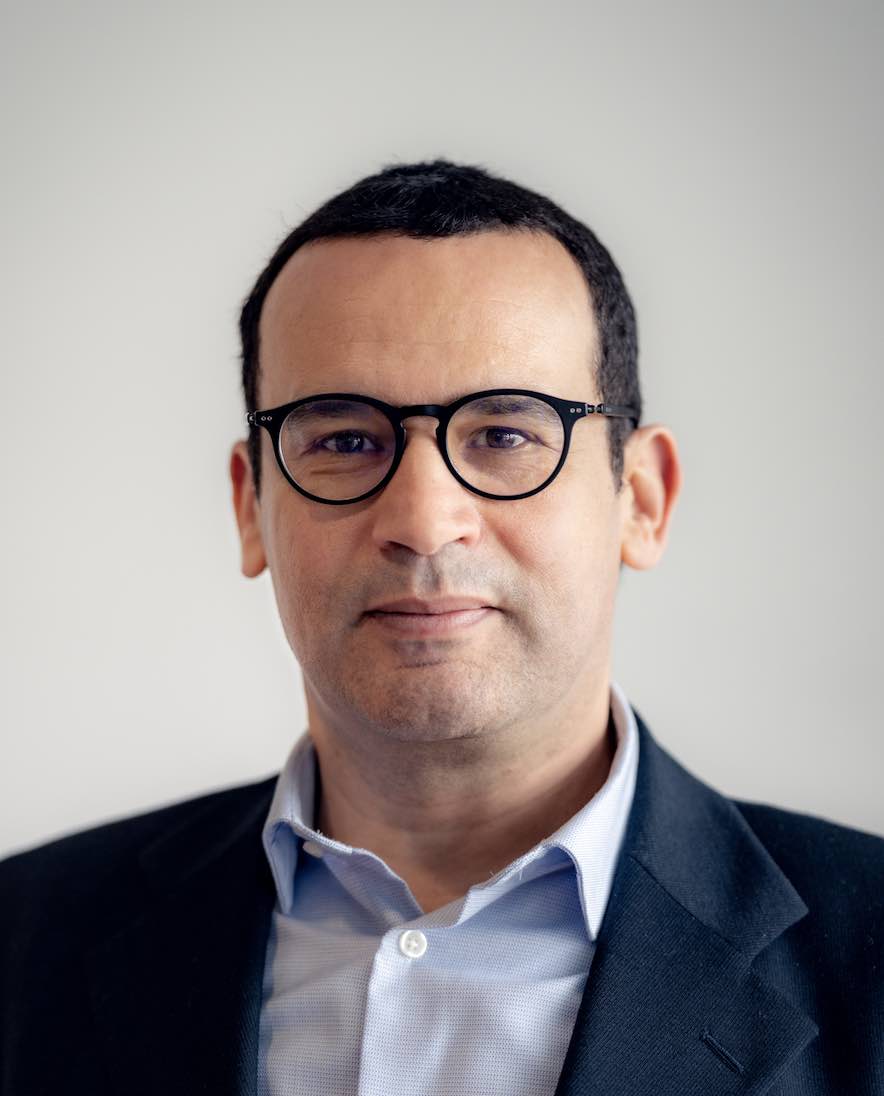
Houssem Haddar is a senior research director at INRIA in France. His specialty is the mathematical and numerical analysis of direct and inverse scattering problems in acoustics, electromagnetics, and elastodynamics. His recent research focuses on: (i) developing fast, data-driven imaging techniques to improve the efficiency and accuracy of inverse problem solutions, (ii) analyzing spectral signatures to better understand and solve inverse problems, and (iii) designing accelerated nonlinear inversion methods to improve computational performance in complex applications.
Dr. Haddar leads the IDEFIX research group, a collaborative laboratory between INRIA, EDF R&D, and ENSTA Paris. There, he oversees innovative projects aimed at solving large-scale inverse problems in engineering and applied science. Dr. Haddar is the author of over 150 research articles and two books, primarily in the field of inverse problems.
Title and abstract of the Talk: To be announced
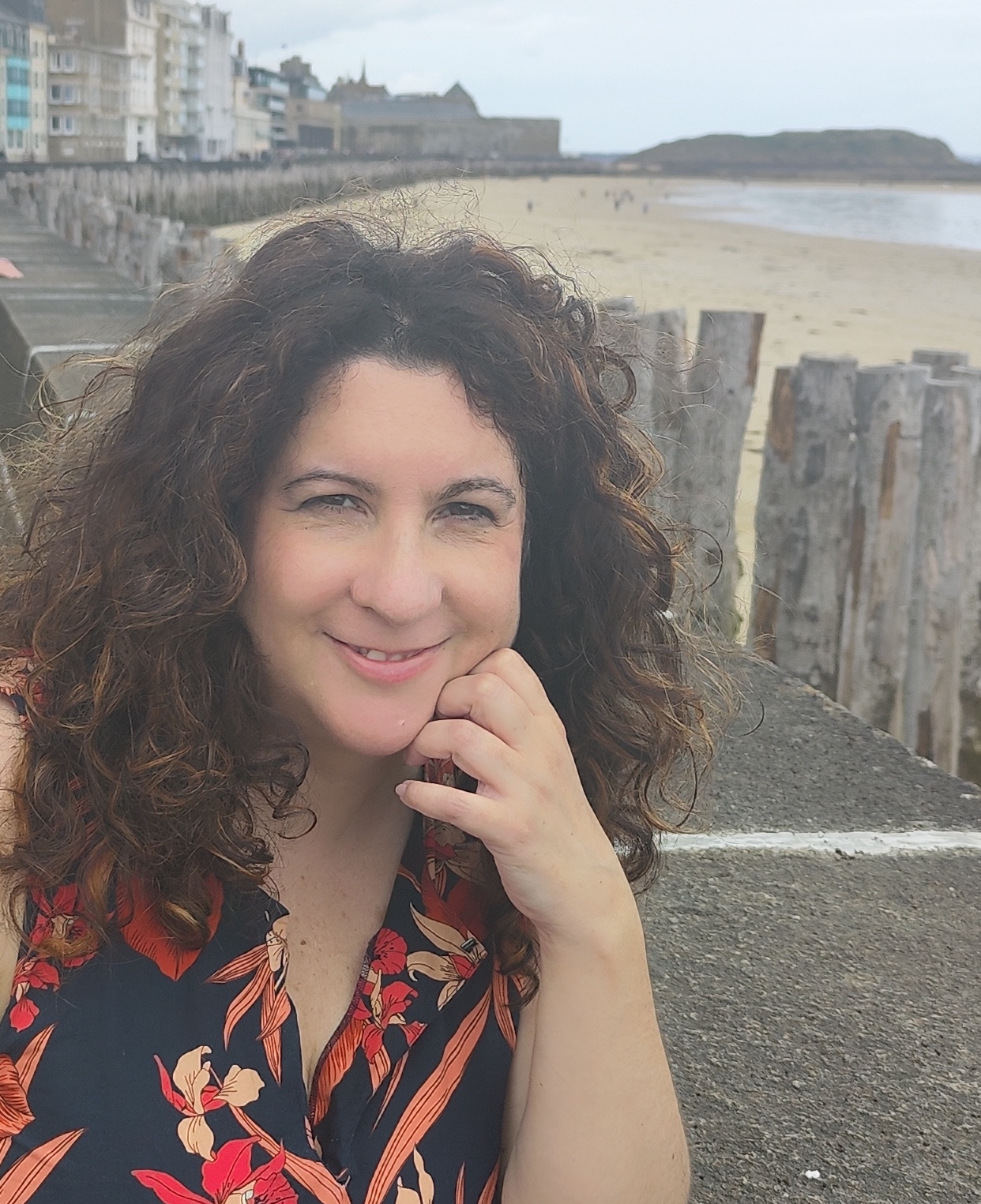
Eva Miranda is Chair in Geometry and Topology at the Universitat Politècnica de Catalunya (UPC), Principal Researcher at the Centre de Recerca Matemàtica (CRM), and Director of the Laboratory of Geometry and Dynamical Systems. She also leads the research group GEOMVAP (Geometry of Varieties and Applications) and, together with Marta Mazzocco, has recently founded the SYMCREA Excellence Unit, dedicated to advancing Symplectic Geometry and its interactions with Mathematical Physics and related disciplines. She has nurtured a vibrant community of researchers and has supervised eleven PhD students.
Her research sits at the crossroads of Geometry, Dynamical Systems, and Mathematical Physics, with a particular emphasis on symplectic and Poisson geometry, Hamiltonian dynamics, singular structures, and their applications to fluid dynamics, celestial mechanics, and computation. She pioneered the study of b-symplectic manifolds, which appear as natural models in restricted versions of the three-body problem, and, recently showed that stationary solutions of the Euler and Navier–Stokes equations can encode universal Turing machines, revealing deep links between geometry and computation.
She has been a speaker at major international conferences, including the European Congress of Mathematics (8ECM), and serves on editorial boards such as the *Journal of the European Mathematical Society*. She is a Board member of the Institut Henri Poincaré in Paris.
Miranda is a two-time ICREA Academia awardee (2016, 2021), recipient of a Chaire d'Excellence de la FSMP in 2017, the Friedrich Wilhelm Bessel Research Award (Alexander von Humboldt Foundation) and the François Deruyts Prize in Geometry (Royal Academy of Sciences of Belgium) in 2022. She was the 2023 London Mathematical Society Hardy Lecturer, Gauss Professor at the University of Göttingen in 2025-2026, and is currently the 2025 Nachdiplom Lecturer at ETH Zürich.
Title and abstract of the Talk: To be announced

Stephen Wiggins is Emeritus Professor of Applied Mathematics at the University of Bristol, UK and the William R. Davis ‘68 Distinguished Chair in Mathematics at the United States Naval Academy. He is internationally recognized in the field of applied and computational dynamical systems theory, with 13 books and more than 250 research articles in more than 60 journals to his name. He moved to Bristol after spending 15 years on the faculty of the California Institute of Technology, as professor of Applied Mechanics. At Bristol he has served as Head of the School of Mathematics (2004–2008), Director of Research (2014-2016), and Director of the Institute of Applied Mathematics (2017-2022). His research pioneered the field of chaotic advection, and has included applications of this mathematical framework to fluid flows across a wide range of scales, from micro mixing, to oceanic transport, to the giant planets’ capture of irregular moons. Focussing on the study of transport and geometric structures in phase space has led him to new applications, the latest of which is the theory of chemical reaction dynamics. He was the principal investigator of a recent EPSRC Programme Grant, Chemistry and Mathematics in Phase Space (CHAMPS), for developing this new interdisciplinary field (https://champs.blogs.bristol.ac.uk) of applied mathematics and theoretical chemistry.
Title and abstract of the Talk: To be announced
ORGANIZERS AND COLLABORATORS